
By Stan Wise
With the vast majority of South Dakota in a drought and experiencing high temperatures, grain producers are having to make some tough decisions about their crops. Will those grains produce enough yield to make harvesting them a financially viable option, or is it better to use those crops as forage for livestock?
Grain crops that won’t yield enough to be worth harvesting can be an excellent source of food for livestock, especially in a drought when pastures aren’t producing enough forage. However, there’s a risk that producers need to be aware of before haying or grazing their small grains.
Grain uses nitrogen to generate protein for growth. “In drought conditions, it’s going to do everything it can to hold on to that nitrogen, and so especially in the lower two thirds of that plant, when it’s droughty, we’re going to see higher nitrate levels,” South Dakota State University Extension Sheep Field Specialist Jaelyn Whaley said.
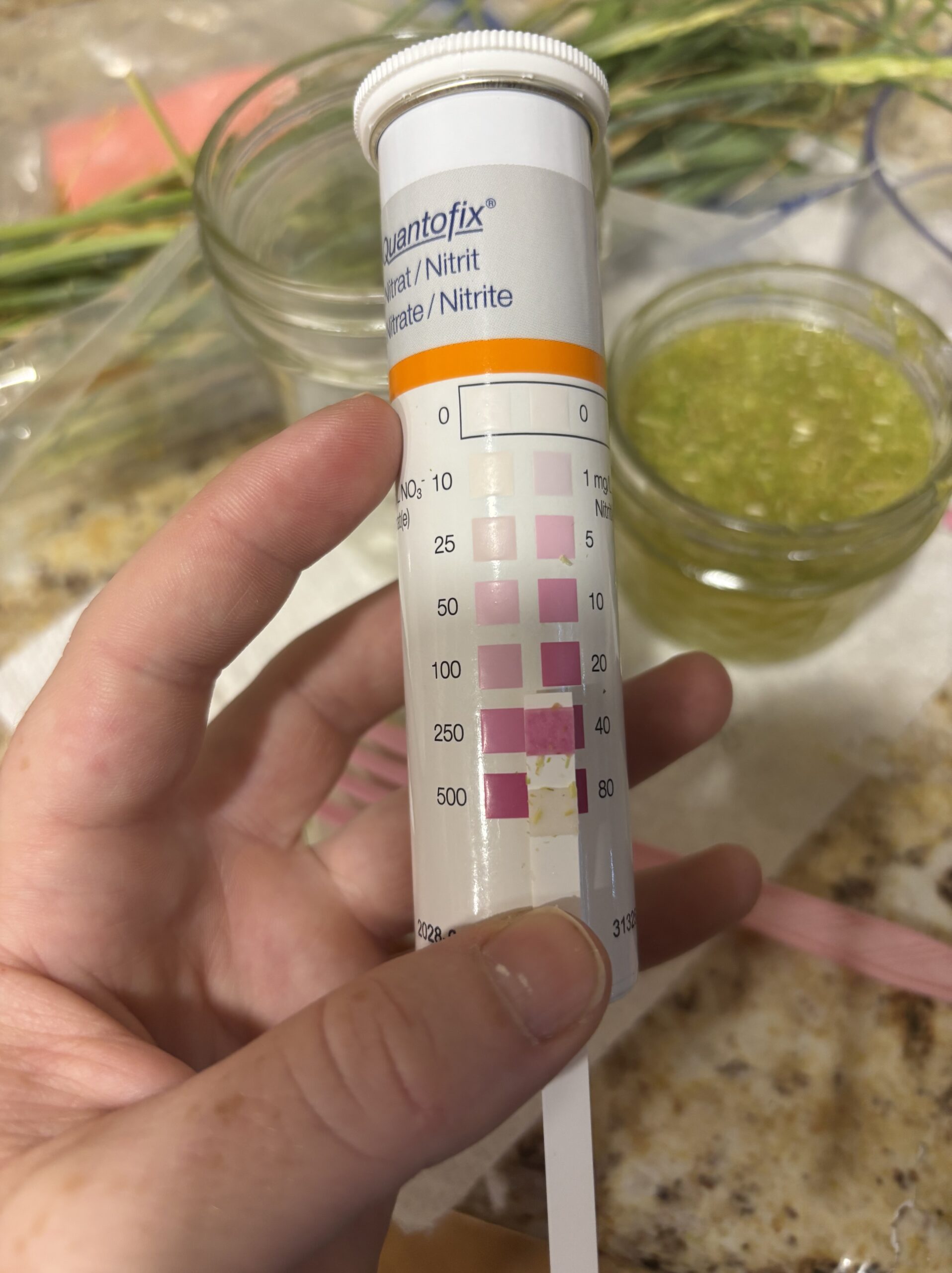
South Dakota State University Extension provides free nitrate testing at various locations across the state. SDSU Extension photo.
Those nitrates pose a problem for livestock.
“When our cattle or our sheep consume that forage, they’re going to take that nitrate, and they’re trying to convert it into something that the animal can actually use,” Whaley said. “When the bacteria do that, one of the intermediates is nitrite, which everybody, I think, is familiar with being toxic. When the animal’s blood levels of nitrite go up, their blood cells can’t sequester oxygen. So, they’re basically, for lack of a better term, suffocating from the inside out.”
Nitrate poisoning can be fatal for livestock, but even if it doesn’t lead to an animal’s death, there’s another risk. “Moving into the fall, especially, most of our cows are going to be bred, and so it can lead to abortions as well, even if it doesn’t actually kill the cow,” Whaley said.
SDSU Extension offers free nitrate testing at several locations around the state, and Whaley said that more precise testing is available at other labs for $15-$20. “I’ve always felt like it’s fairly cheap insurance,” Whaley said.
Producers should start to become concerned about nitrates once they reach 1,000 parts per million of nitrate-nitrogen in a test sample, she said. “At 1,000 parts per million, if you’re feeding it to yearlings or calves or non-pregnant animals, you should be safe. But at a thousand, we start to recommend that you limit that to 50% of the ration in pregnant females,” Whaley said. “We can make adjustments from there up to 4,000. If it exceeds 4,000 parts per million, that’s when we start saying you absolutely cannot feed this to your livestock.”
The good news is that nitrate levels in grains decrease as the plants mature, Whaley said. So if producers can wait a little longer before haying or grazing the grain crop, there should be less risk for livestock.
Haying versus grazing
Producers who plan to use a grain crop as forage need to decide whether they will cut and bale the grain as hay or allow livestock to graze it in the field.
South Dakota Health Coalition Soil Health Specialist Ryan Beer said that haying the grain can make things a bit simpler. “You can get it all at the right time. If you’re going to graze it, it’s going to turn fairly quickly to where the quality is just going to keep going down,” he said. “You could hay it all in a short time, get it knocked down and baled, and it’s all that pretty good quality.”
However, there are other advantages to letting livestock graze the grain in the field. For one thing, producers won’t have to spend the time and fuel necessary to hay it. “You’re also going to leave all those nutrients that those plants have there, so it’s going to help the soil,” Beer said.
He noted that there are options other than grazing if producers want to maintain a consistent forage quality by haying the grain and also keep the nutrients on the field where it was grown. “You can do things like feeding it back on that ground, bale grazing, or even just rolling it out and spreading it on those fields, trying to keep those nutrients there. That’s going to be a benefit,” Beer said.
Regardless of which method is used, Beer said it is important to leave some residue on the ground to protect the soil from erosion. Producers can cut the grain a little higher to leave some stubble as well as to avoid the nitrates which tend to concentrate in the lower portion of the plants.
SDSU Extension offers several online videos with information on the issues surrounding the use of drought-stressed crops as forage which can be accessed at bit.ly/CropsAsForage.
Producers who are looking for additional forage or have grain forage to offer other livestock producers can use the free South Dakota Grazing Exchange website (www.sdgrazingexchange.com) to find resources or list the resources they can offer.
The Farm Service Agency has recently expanded its Livestock Forage Disaster Program which offers financial assistance to livestock producers who suffer eligible grazing losses due to a qualifying drought or fire. To apply for this program, producers can visit their local FSA office.
To learn more about soil health land management practices, visit www.sdsoilhealthcoalition.org or contact the South Dakota Soil Health Coalition at sdsoilhealth@gmail.com or 605-280-4190.
Click here to download a printer-friendly version of this article.
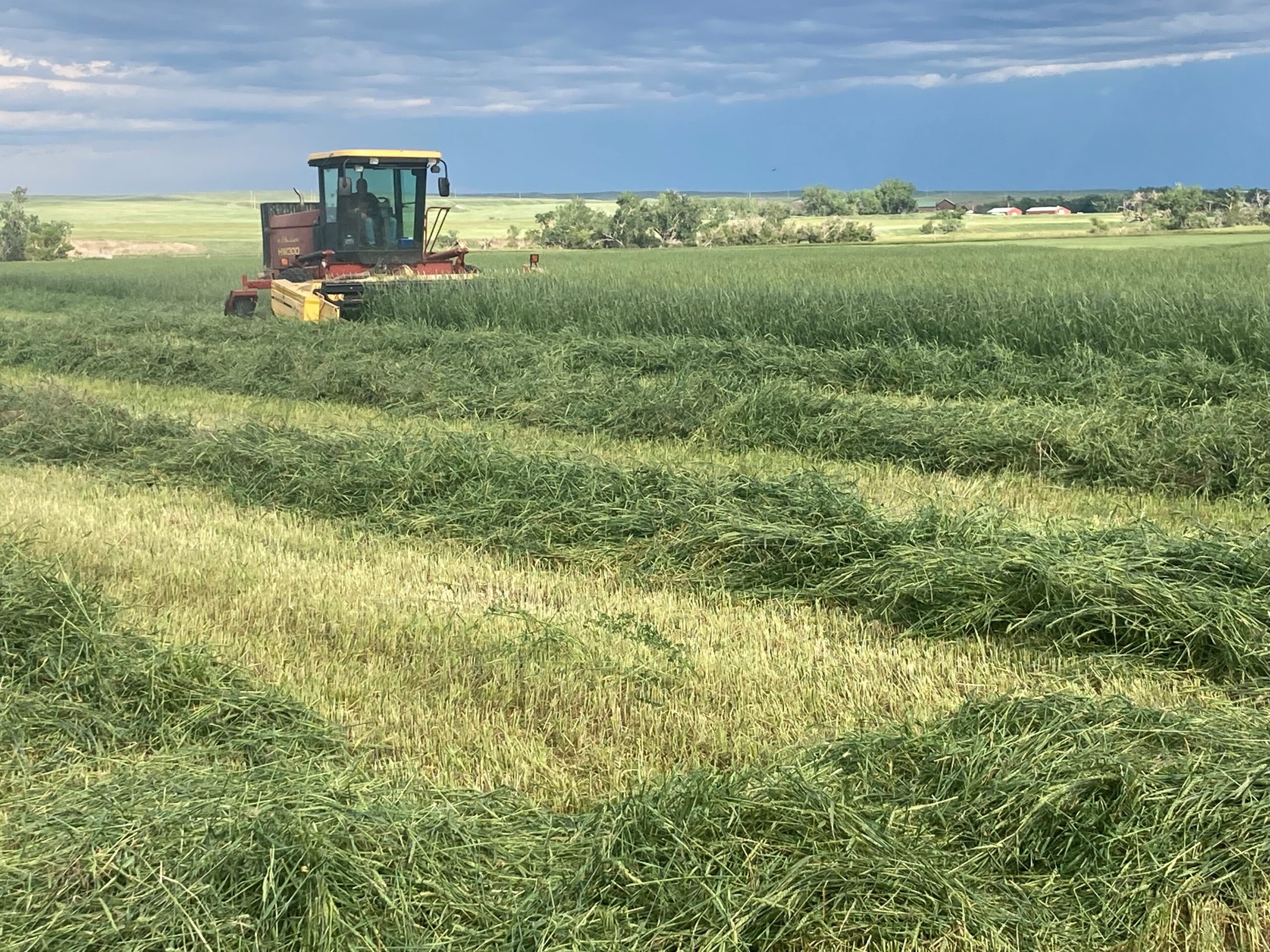
This winter wheat is being cut for hay near Newell, SD. Producers should test grain crops for nitrate levels before using them as forage. SD Soil Health Coalition photo.
0 Comments