
By Stan Wise
For an agricultural operation to thrive, producers must sometimes look at the big picture and make decisions to benefit the long-term success of their farm or ranch. Changes made on a farm now might take years to realize their positive effects, but those changes can be crucial to the farm’s survivability.
Researchers at the North Central Agricultural Research Laboratory near Brookings, SD, have spent decades trying to find the information producers need to make those decisions. The lab, operated by the U.S. Department of Agriculture’s Agricultural Research Service, has maintained long-running experiments that have offered useful insights into the benefits of several different crop rotations.
One rotation showing promising results consists of corn, soybeans, spring wheat, and sunflowers, in that order.
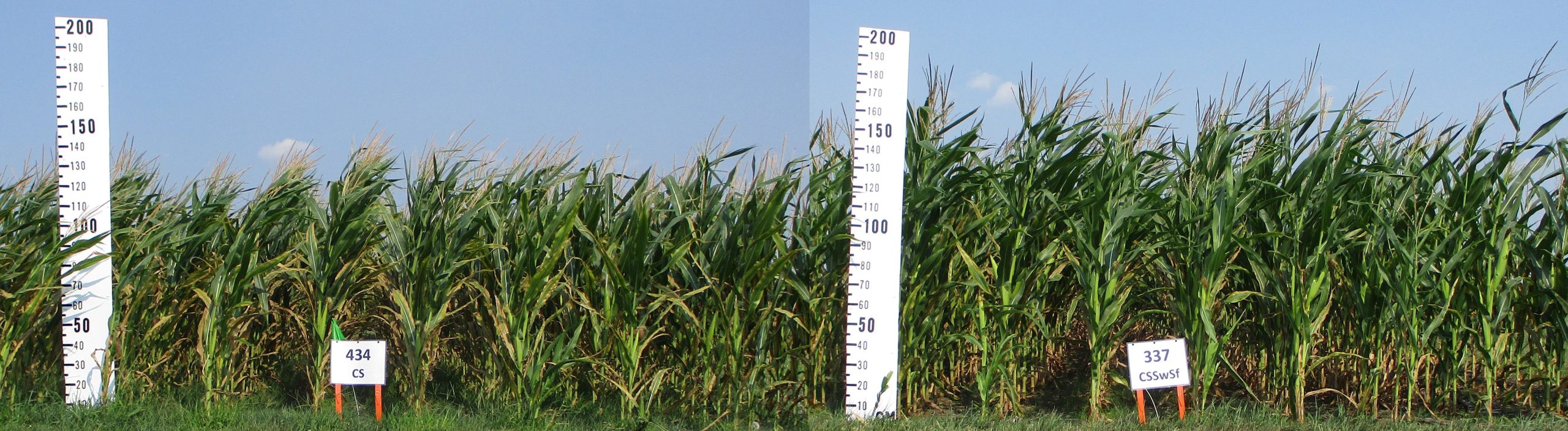
This is a visual comparison of corn grown in two different crop rotations in late July 2024 at the North Central Agricultural Research Laboratory near Brookings, SD. The corn on the left was grown in a corn-soybean rotation, and the corn on the right was grown in a corn-soybean-spring wheat-sunflower rotation. This comparison demonstrates increased height and biomass for corn in the diverse four-year rotation. USDA-ARS photo.
Sunflowers for soil health
The rotation experiment has been running at NCARL for 26 years in a no-till setting, and it has yielded results that can only been obtained through multi-year repetition.
ARS Soil Microbiologist Michael Lehman’s research shows there are soil health advantages to adding sunflowers and small grains to a traditional corn-soybean rotation.
He has observed increased enzymatic breakdown of residue by microbes in the soil following sunflowers. That’s an indicator of increased microbial activity, which promotes soil aggregation, the accretion of soil into stable clusters which allow for increased water infiltration rates, higher water storage capacities, and reduced erosion.
“How are we demonstrating that it’s improving aggregation? We’ve measured the erodible fraction,” Lehman said. “That decreases when you’re measuring it in the corn phase following sunflower compared to soybean. So that’s good. You want low erodible fraction and higher (microbial) activities. We’ve also looked at carbon mineralization activities. Same pattern with activities increasing in corn after sunflower.”
That’s not the only benefit Lehman has noticed.
“There’s more arbuscular mycorrhizal fungi in the corn following sunflower that are associated with corn roots and are able to mobilize nutrients and water and protect the roots against pathogens,” he said. “And there are less pathogens on the corn following sunflower than the other crops.”
All of this is good news for producers.
“The bottom line is your soil has better structure. It has better pore structure. It’s biologically active,” Lehman said. “So why does the farmer care? The farmer probably would like better soil structure. Better air and water infiltration. I think they would like higher soil carbon, which we’ve seen in those plots. I think it would be good if it had less bulk density, which we’ve measured in those plots.”
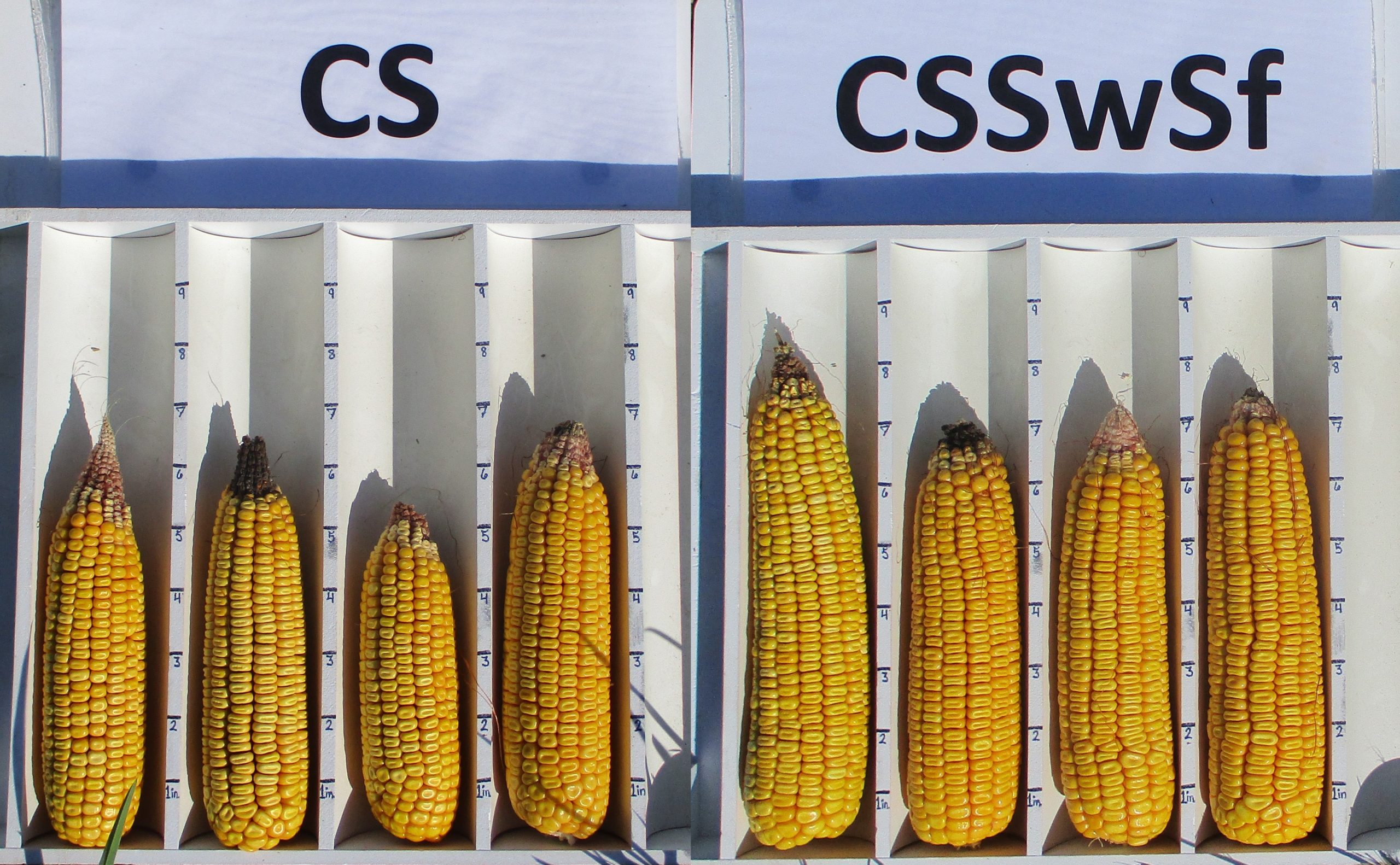
These ears of corn were taken in 2024 from the long-running crop rotation experiment at the North Central Agricultural Research Laboratory near Brookings, SD. The ears on the left were taken from a corn-soybean rotation. The ears on the right were taken from a corn-soybean-spring wheat-sunflower rotation. This comparison shows a yield advantage for corn grown in the diverse four-year rotation that includes sunflowers. USDA-ARS photo.
Sunflowers for stability
A four-year rotation that includes sunflowers offers more than improved soil health. It also offers stable corn yields despite weather extremes, ARS Research Agronomist Shannon Osborne said.
“In years with adequate rainfall, we do not see a difference in corn yields between the corn-soybean rotation compared to the diversified four-year rotation,” Osborne said. “In years where rainfall is limited at some point during the growing season, we see an average yield increase of approximately 35 percent when corn is grown in a four-year rotation compared to a corn-soybean rotation.”
Osborne noted that the rotation experiment plots are only fertilized for 85 percent of maximum yields and that producers who apply the full rate of fertilizer may not see such a dramatic yield disparity.
The reason for the lower fertilizer rates, Osborne said, is to allow the soil to function in a productive manner. “If the plant has all the nutrients that it needs, is it going to signal to the microbes that it needs things and get the microbes to do it?” she asked.
She noted that soils at the research farm are low in plant-available phosphorous, yet the crops grown there aren’t deficient in phosphorous.
“So, the soils are able to provide the nutrients that it needs. It’s converting that total phosphorus into a plant-available phosphorus,” Osborne said.
An economic study of the rotation experiment showed no decline in net profitability for the rotation that included sunflowers. “It was just as profitable as the corn-soybean rotation was,” Osborne said.
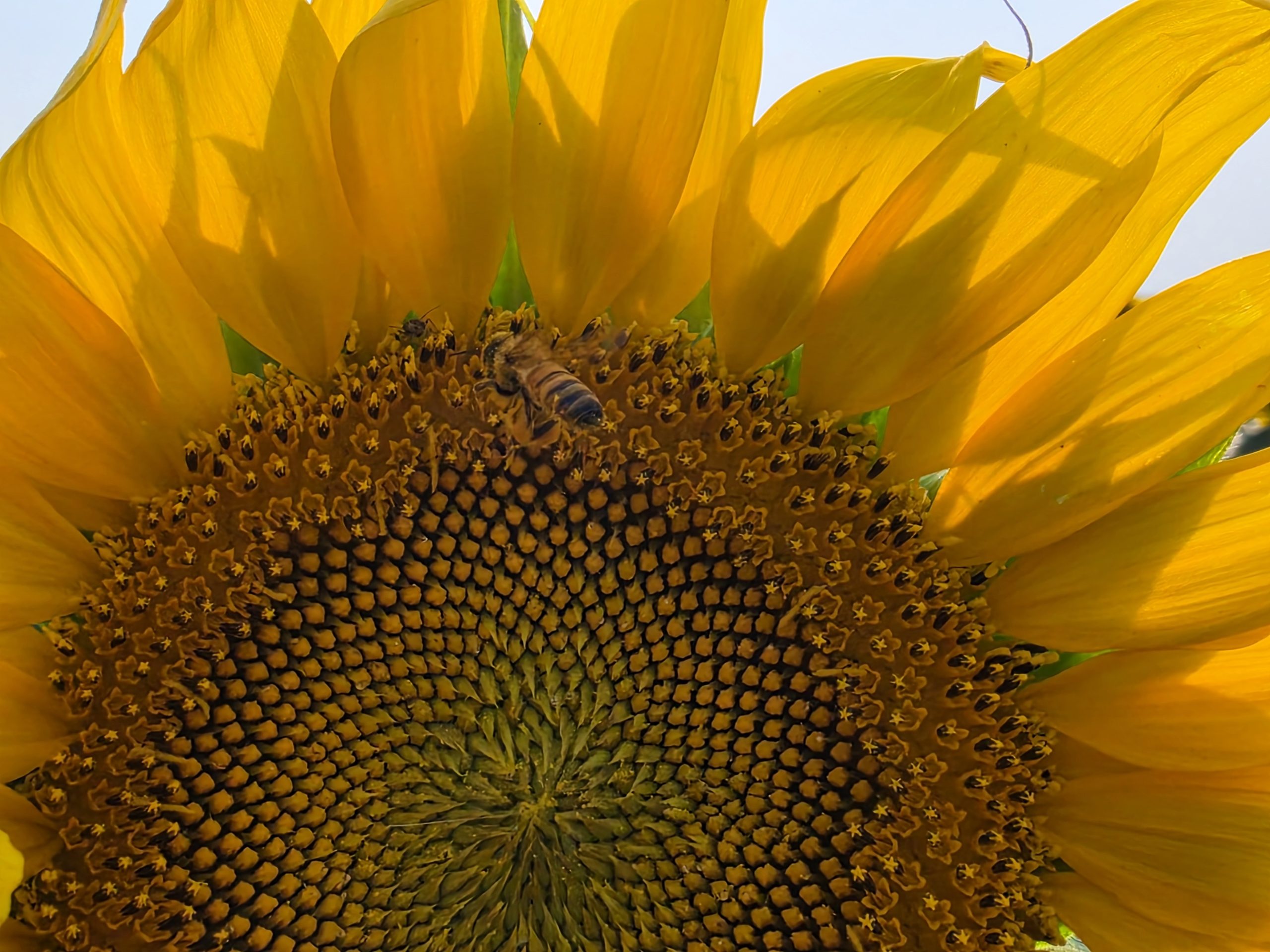
A bee pollinates a sunflower near Groton, SD, in late July 2026. Sunflowers grown in a rotation with cover crops have been shown to have a higher sugar content in their nectar, which is beneficial for pollinators. SD Soil Health Coalition photo.
Cover crops for more benefits
Adding cover crops to the 4-year rotation that includes sunflowers unlocks some surprising benefits for pollinators and sunflower yields.
“The concentration of sugar in the nectar was a lot higher in the sunflowers with cover crops by about 28 percent, which is substantial for both attracting pollinators to the plants, but also really important for development of the larva and the brood that bees are actually producing,” ARS Research Entomologist Karl Roeder said. “And for the adult bees themselves, we saw about a 74 percent increase in abundance and a 33 percent increase in the number of species on sunflowers with cover crops.”
Roeder said the cover crops also affected sunflower yield.
“We also saw some pretty big bumps in yield,” he said. “I think it was about a 36 percent increase in the mass of the seeds that were produced on those sunflowers that had cover crops.”
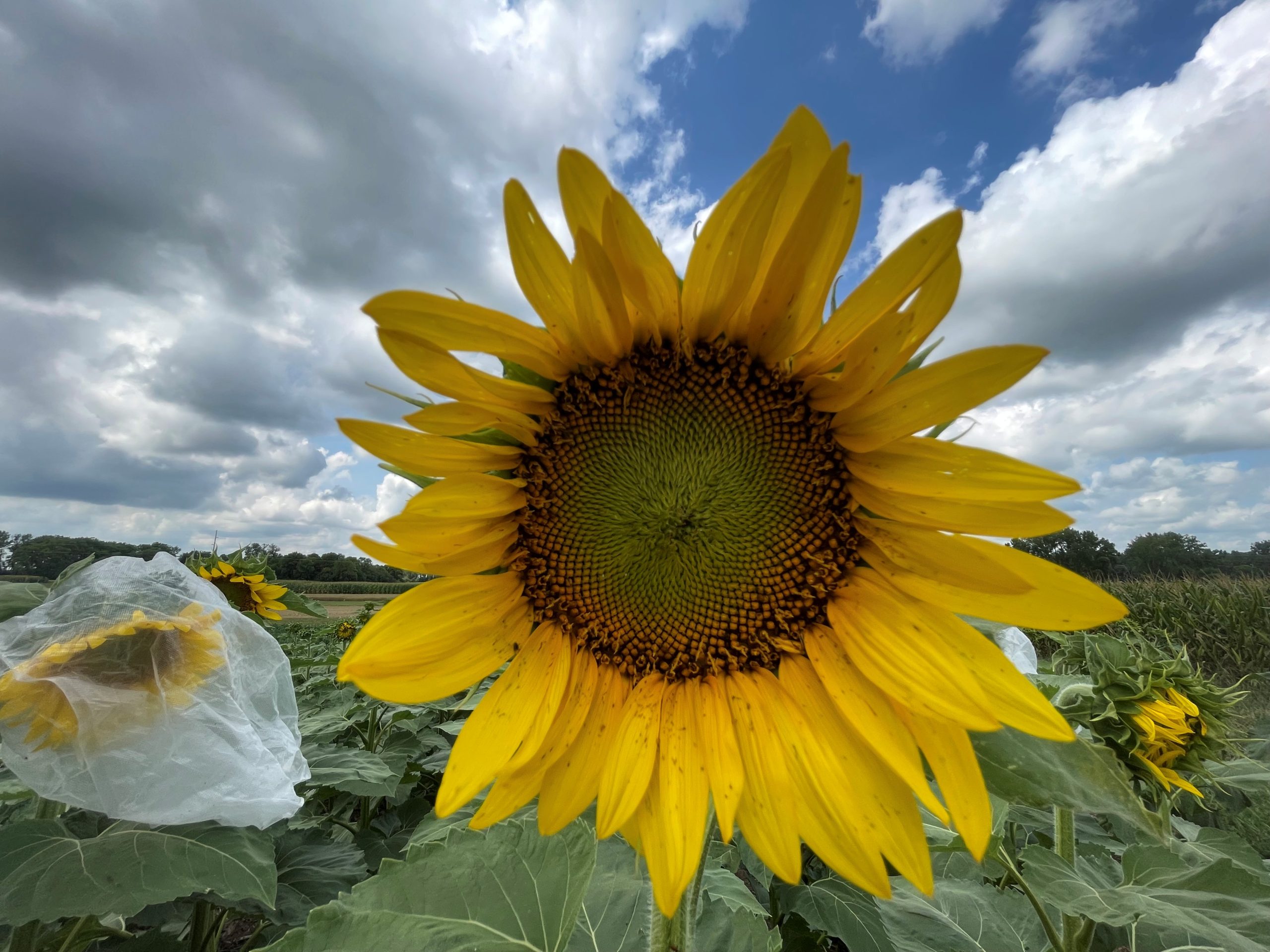
These sunflowers were grown as part of a long-running crop rotation experiment at the North Central Agricultural Research Laboratory near Brookings, SD. By placing bags over some sunflower heads, researchers are able to protect them from insect damage, which allows them to calculate the crop yield potential in the absence of insect pests. USDA-ARS photo.
Making it work
Currently, sunflower production in South Dakota is concentrated in the central portion of the state.
Onida, SD, producer Chuck Todd, who is president of the National Sunflower Association and chairman of the South Dakota Oilseeds Council, thinks sunflowers can be a profitable addition to crop rotations on the eastern side of the state, which receives higher annual precipitation.
“I think you could make 3,000 (pounds per acre),” he said. “I think the cash price for sunflowers right now would probably be in that 25-cent range per pound. That puts you at gross receipts of $750 (per acre).”
Todd said the breakeven cost for sunflowers in his area is $405 per acre, a sum that includes average land rental rates.
“We put less inputs into our sunflowers than we do corn with respect to fertilizer and seed costs. So that helps a little bit, too, on net revenue,” he said.
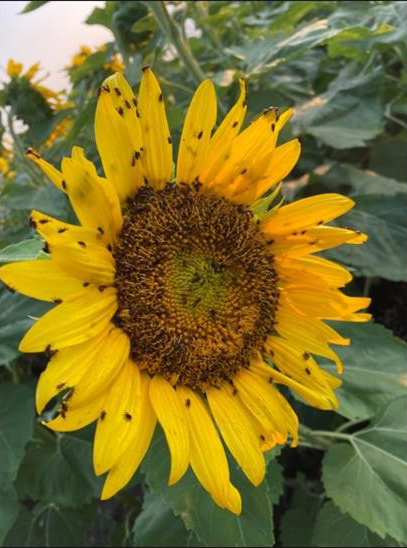
This photo shows a sunflower infested with red sunflower seed weevils. The adult weevils are only about 2 to 4 millimeters in length, and they can be found in vast numbers in a severe infestation. The weevil larvae damage the seeds, and an uncontrolled infestation can devastate crop yields and limit its uses to bird seed or sunflower seed oil. USDA-ARS photo.
Challenge
One of the largest challenges of growing sunflowers in South Dakota is controlling the red sunflower seed weevil.
“Because the red sunflower seed weevil is so well synchronized with sunflower production, severe infestations are common in South Dakota,” South Dakota State University Associate Professor and Extension Field Crop Entomologist Adam Varenhorst said.
Those severe infestations being managed routinely with insecticides combined with sunflower production being concentrated in just a few counties in central and western South Dakota has led to the development of pyrethroid resistant weevils.
“To date, we’ve confirmed red sunflower seed weevil resistance to multiple pyrethroid active ingredients that are labeled for the pest in sunflowers at all of the commercial sunflower fields that were tested in South Dakota,” Varenhorst said.
While there are a limited number of insecticides that are still effective, some cultural control practices have proven to be effective, both recently and in past research.
Recent research in North Dakota and South Dakota has shown that early planting dates for sunflowers reduces seed damage, increasing yields and oil content, Varenhorst said.
“If we plant sunflowers early enough, in early- to mid-May, we see reduced seed damage caused by the red sunflower seed weevil,” he said. “We’ve reduced the seed damage from somewhere in the 60 to 80 percent potential, down to the 5 to 10 percent range. Early planted sunflowers will still have infestations, but the heads are too developed for the female weevils to lay eggs successfully.”
The percentage of damage in a crop determines whether it is suitable for the confection market or if it must be sold for the bird seed or oilseed markets. The confection market pays a premium for sunflower seeds, but it has been hard to meet the standards of that market for growers in central South Dakota where the resistant populations of weevils are found.
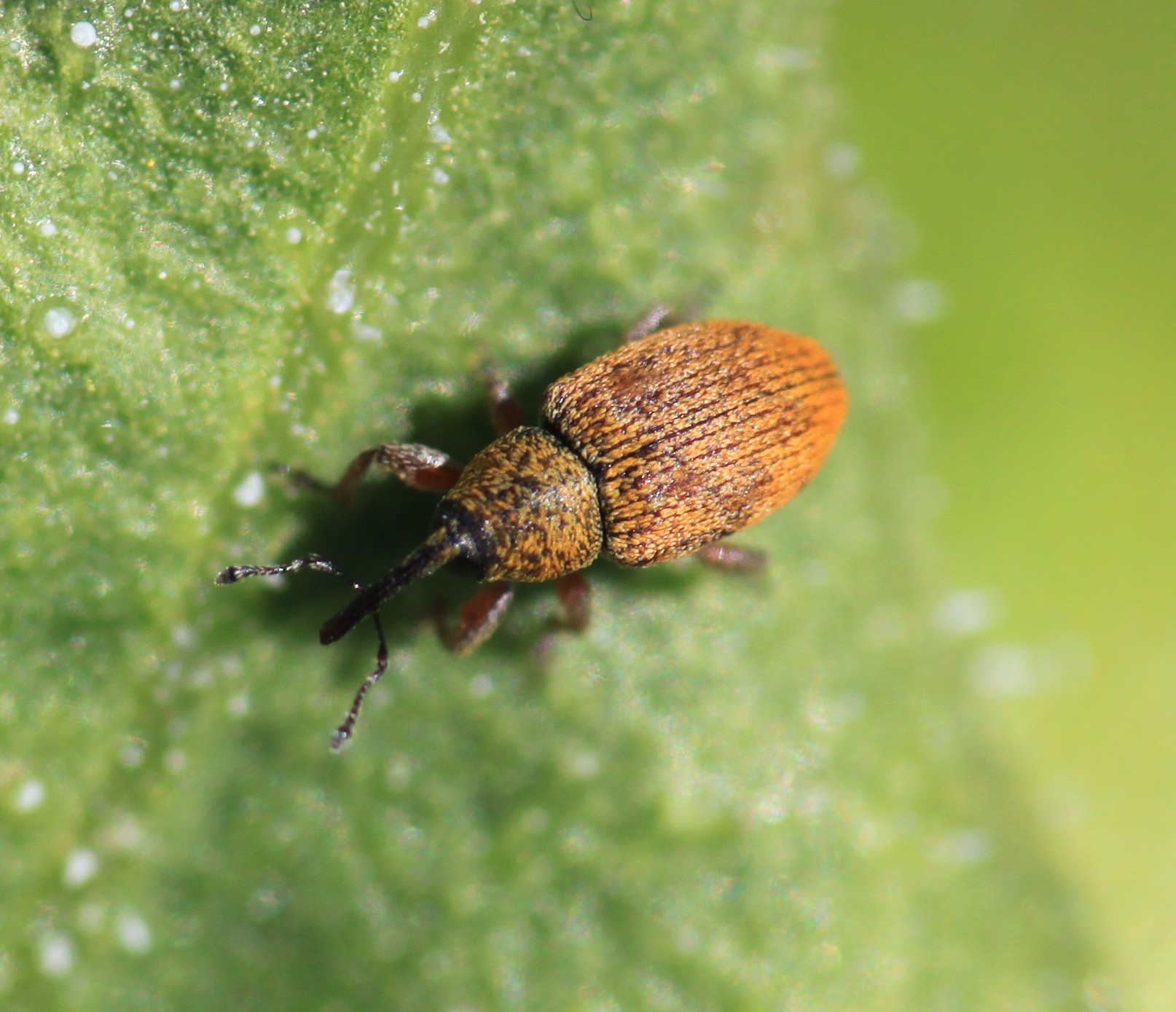
This photo shows a female red sunflower seed weevil. The weevil’s bodies are dark in color but are covered with reddish-orange hairs. They have an elongated snout with antennae that originate from the snout. Photo courtesy of Adam Varenhorst.
“One of the big questions is whether or not the resistant populations will exist outside of the central and western South Dakota areas, or if susceptible populations exist in eastern South Dakota and will remain somewhat isolated there,” Varenhorst said.
During the 2026 season, Varenhorst has tested at least one population of red sunflower seed weevils in Brookings County and found it to be highly susceptible to four pyrethroid active ingredients. “These results are promising and suggest that red sunflower seed weevils in eastern South Dakota may be widely susceptible to insecticides,” he said.
Todd is optimistic weevil populations in the eastern part of the state have not yet developed insecticide resistance. “I think the reason we have the problem with the sunflower weevil is because we have just so many acres all concentrated in a certain area,” he said. “If we could spread some of those acres back to areas that have grown flowers before, I think we could get the confection market back here, and they could find acres that they need in South Dakota.”
Todd said that producers wanting to start growing sunflowers will need some on-farm storage facilities for the seeds where they can wait until they are brought to market. He also suggested contacting a sunflower producer and asking lots of practical questions.
Osborne, who experienced a learning curve when first growing sunflowers for the long-running rotation study, suggested producers start small and see if sunflowers will work for them. “Incorporate a little bit. See what you think,” she said. “And you know, don’t give up if you have one year of failure because it takes a while for good things to happen. You can’t build soil health overnight.”
For more information about the benefits of diverse crop rotations visit www.sdsoilhealthcoalition.com or contact the South Dakota Soil Health Coalition at 605-280-4190 or sdsoilhealth@gmail.com.
To download a printer-friendly version of this article, click here.
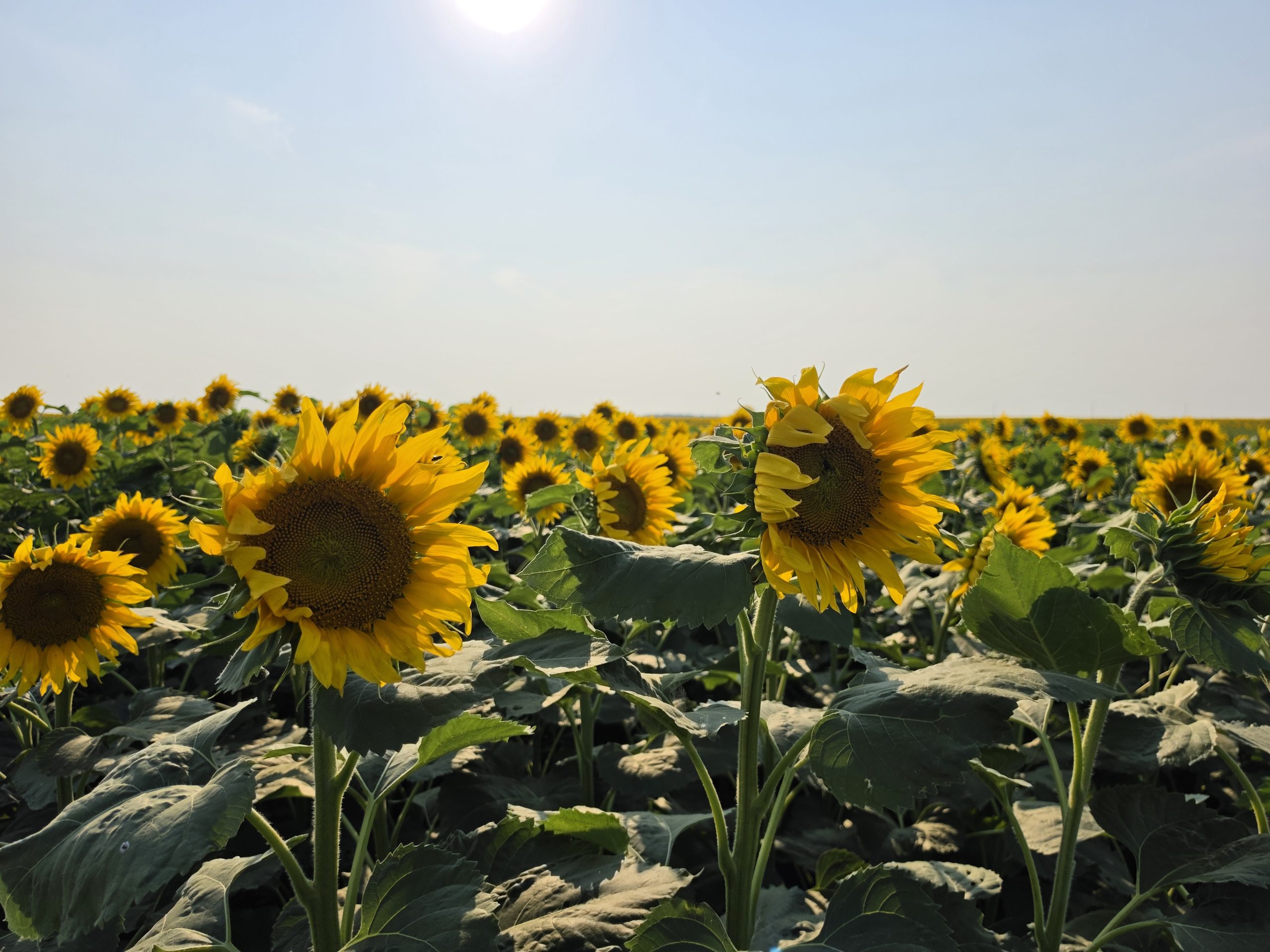
A field of sunflowers grows near Groton, SD, in late July 2026. While sunflowers are rare in the eastern portion of the state, they are still a viable crop and a beneficial addition to traditional crop rotations. SD Soil Health Coalition photo.
0 Comments