
By Maddy Kludt
PIERRE, SD – A fence that doesn’t exist might sound impossible, but it became a reality for a group of South Dakota cattle producers this summer.
Through South Dakota Soil Health Coalition’s Virtual Fencing Program, producers were able to use Gallagher eShepherd’s virtual fencing collars and technology to move, monitor, and manage their cattle from mobile devices or desktops. They were able to lease the collars for the summer to test whether the technology could help address challenges on their operations ranging from labor shortages to pasture management.
“I believe virtual fencing will revolutionize grazing, provided the operator pays close attention to his grass or whatever resource he is grazing,” Shawn Freeland said. Freeland is a livestock producer near Caputa, SD, who has been using virtual fencing for the last two years.
“There’s never been a time where it’s been so easy to mimic nature’s grazing template,” he said.
Virtual fencing gives producers new opportunities to manage grazing more precisely and provide recovery periods for pastures, creating visible soil health and forage utilization improvements.
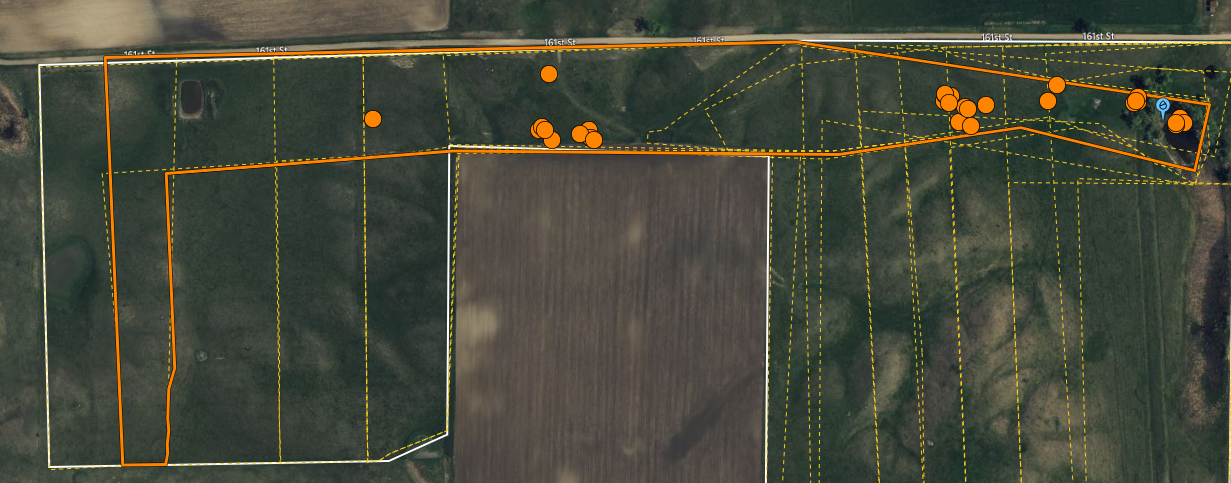
Producers using virtual fence technology can draw boundaries on maps of their property and monitor cattle locations in real time. Courtesy image.
For Kurt Stiefvater, a Salem, SD, producer who participated in the program from July to October, that flexibility created noticeable changes in both his cattle’s behavior and his valuable forage resources. “They utilized the forage more because we could control it a bit better instead of just an open field,” he said.
Stiefvater also observed that some desirable plants were able to complete their growth cycle. “I think some of those grasses were able to go to seed where they’ve normally been cow harvested and consumed by the cow,” he said. Greater control over grazing time and intensity also created opportunities for improved plant recovery and healthier pasture conditions, key principles of soil health management.
Freeland said the technology can open up new grazing opportunities. “Virtual would work really well in a crop rotation with perennials in it,” he said. “A farmer could graze crop residue or cover crops on their farm ground and quickly and easily move the cattle to a perennial pasture in the event the frost comes out or wet weather shows up.”
Many producers are searching for tools that can improve both operational efficiency and quality of life. The South Dakota Soil Health Coalition recognized this need for advanced technology and launched a program to aid producers in adopting new practices. The program aims to address ecological, social, and economical challenges such as grazing management, labor shortages, water quality, and producers’ lives outside of their operations.
The initiative was announced in January at the Soil Health Conference. Applications were received from producers throughout the state, highlighting a wide range of reasons for interest in the program. As spring approached, applicants were reviewed and selected based on a variety of program criteria such as location, number of head requested, and previous interest in virtual fencing collars.
Once participants were selected, they began onboarding and training with the virtual fencing system and introducing the cattle to the collars in their training paddocks. While many participants entered the initiative with little or no hands-on experience with the technology, the training period helped build confidence in themselves and their cattle before the collars were fully deployed in the field.
Stiefvater was initially curious about how quickly the cattle would adapt to the technology. “I was surprised how fast they would learn where the boundary was with the audio signal first before any shocking went on,” he said.
Participating producers used the collars to improve rotational grazing efforts or manage areas where traditional fencing was difficult, expensive, or impractical to install. One of the most significant advantages Stiefvater observed was the reduction in time spent managing fence. “It definitely freed up time. We didn’t have to manage the physical fence as much,” he said. Greater control over grazing time and intensity also created opportunities for improved plant recovery and healthier pasture conditions.
While the experience was positive for the operation, Stiefvater acknowledged that adopting a new management tool required patience and a willingness to learn. “Probably the biggest challenge is learning the app a little bit and getting that figured out,” he said. However, he emphasized that the opportunity to gain hands-on experience in this unique program made the process of learning the tool worthwhile. “Being able to use them here, lease them and use them for a period of time was awesome. When you actually do it and have kind of a hands-on feeling of using them, it makes a difference.”
Beyond the immediate benefits, the program also provided producers with an opportunity to evaluate how virtual fencing may fit into their long-term operational goals. By reducing barriers to adoption and providing learning opportunities, SDSHC has helped producers explore new approaches to livestock management across South Dakota.
While virtual fencing may not replace traditional fence in every situation, for many participants, the experience showed that an invisible fence can have a visible impact on both the land and the ones who depend on it.
“The Coalition started its virtual fence leasing program so producers could try the technology firsthand with their own cattle and operations. We wanted them to see whether it could improve efficiency and support grazing practices that benefit livestock, soil, and forage production,” SDSHC Executive Director Cindy Zenk said. “The program has been successful. Some producers are ready to buy collars after their leases, while others found the technology worked as expected but are not yet ready to purchase. We encourage livestock producers to apply and learn more about virtual fencing.”
To learn more about the benefits of virtual fencing and regenerative grazing, visit www.sdsoilhealthcoalition.org or contact the SDSHC at 605-280-4190 or sdsoilhealth@gmail.com.
Click here to download a printer-friendly version of this article.
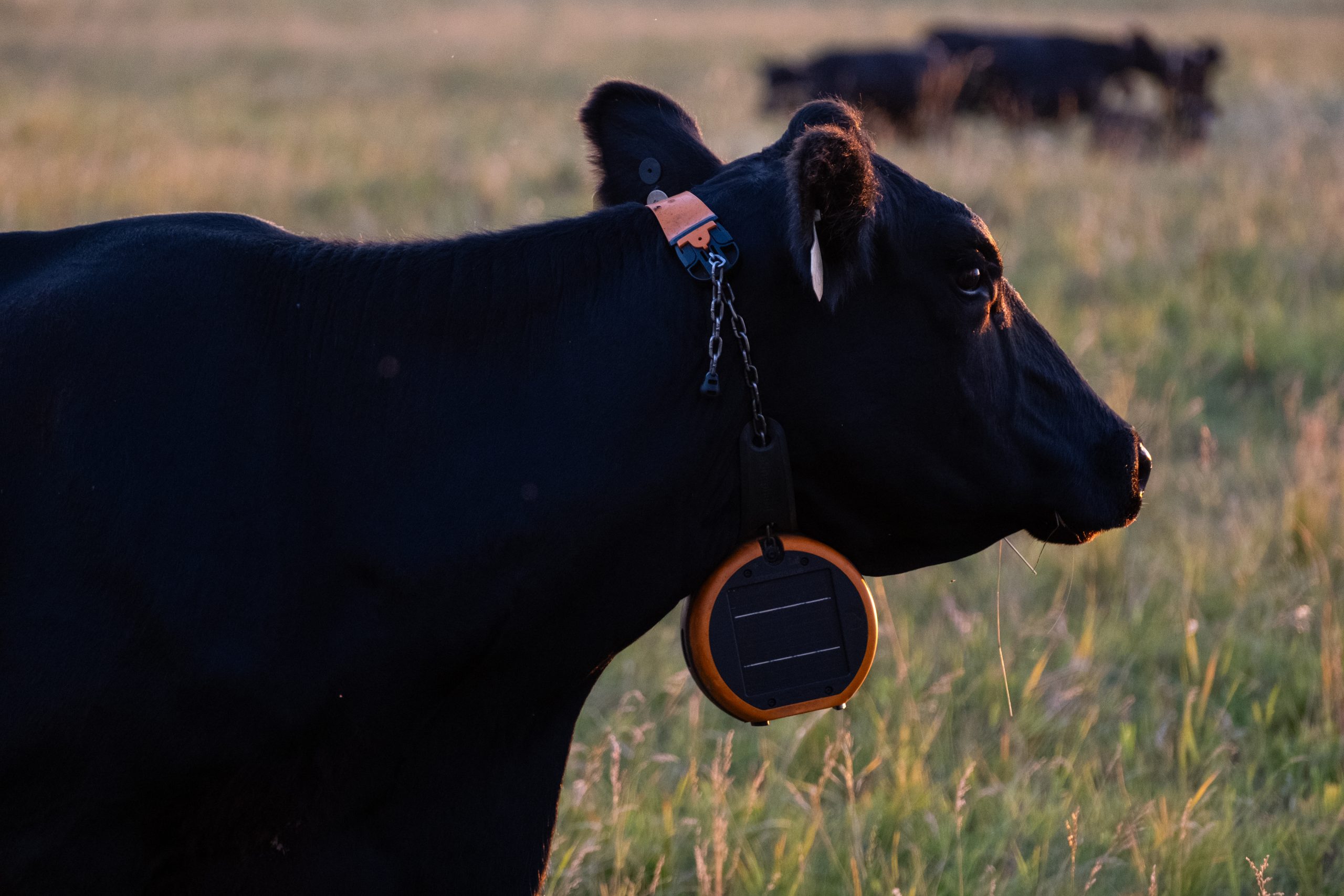
The South Dakota Soil Health Coalition has a launched a program to allow livestock producers to lease virtual fencing collars to gain experience with the technology and see if it will work in their operations. Courtesy Photo.
0 Comments